Forhenv. minister og EU-kommissær Frits Bolkestein giver en krystalklar analyse af de tyranniske tåber, der - inspireret af anti-oplysningsprofeten Rousseau - har overtaget Vestens politiske kommandoposter. Ulykkerne skyldes et kulturelt sammenbrud.
Cultural confidence and the liberal death wish
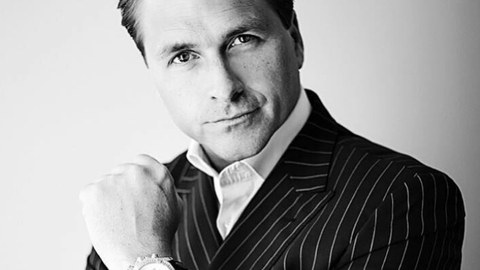
Frits Bolkestein
February 24, 2013
The following is a selection from the conclusion of Frits Bolkestein’s book, The Intellectual Temptation. For more information, see www.fritsbolkestein.com
At the end of my studies, back in the fifties of the last century, I thought of writing a thesis on “the anti-democratic intellectual.” The Cold War was then still very much in full swing, and many intellectuals had gone to the Soviet Union. Instead I went to East Africa to sell oil. But the subject stayed with me.
After a life full of activity, I decided to write a book on the lure of ideology in politics from which the fellow travelers of communism seemed to have suffered. Usually this sort of subject is written about by intellectuals. I am more of a politician, so my experience and perspective are different.
Intellectuals are people who are interested in abstract ideas. Some may be about the arts or sciences, religion or culture, others about politics. In the case of politics, such ideas are even–tually communicated to the public. Three elements – abstract ideas, politics, and communication – combine to form what is known as the “public intellectual.”
Not all ideas of public intellectuals are valuable. Far from it. For ideas to have value they must be based upon and capable of being tested by experience. The people that promoted the Russian revolution did not have a clue as to what should happen afterwards. According to Sorel, Marx had once said that anyone who makes plans for after the revolution is a reactionary. “First we’ll destroy and then we’ll see,” was the slogan. Some of the wilder enthusiasts of the cultural revolution of 1968 thought the same.
Yet, with a few notable exceptions, the great political treatises have been written after the authors had turned fifty. Most young people – and nearly all young intellectuals – have not had the opportunity to acquire experience. It is therefore likely that their political ideas have little value, particularly if they are of a general nature.
Youth is naturally inclined to the romantic, which has had a disastrous effect on politics. Rousseau was a romantic. His Social Contract foreshadowed totalitarianism; as he wrote, “Whoever refuses to obey the General Will shall be compelled to do so by the whole body. This means nothing less than that he will be forced to be free.” It is remarkable how much revolutionary movements have relied on youth. Gregor Strasser, leader of the left-wing Nazis, said: “Out of the way, old men” (Macht Platz, ihr Alten). The Italian Fascist movement appealed to giovinezza. In 1968 a slogan was: “Do not trust anyone over forty.”
Læs videre her: http://www.clarionreview.org/2013/02/cultural-confidence-and-the-liberal-death-wish/